This article gives general information about the United States. Rules and practices differ by state and locality.
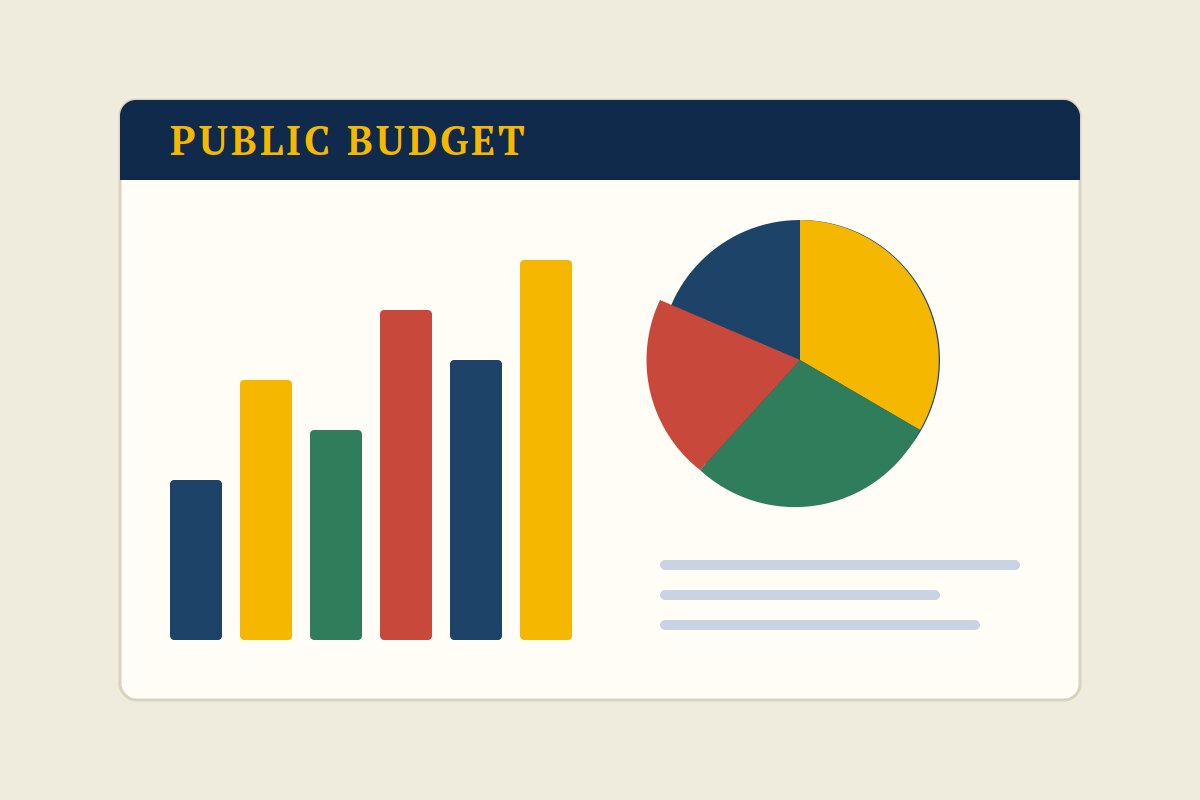
A public budget is a plan for how a government will raise and spend money. It reflects priorities, so reading it tells you what a community values. You do not need to be an accountant to make sense of it.
Start with the summary
Most governments publish a budget summary or “budget in brief”. It usually shows total revenue, total spending, and major categories such as public safety, roads, parks, and administration. Begin there before you open the full document.
Key terms
- Revenue: money coming in, from taxes, fees, grants, and other sources.
- Expenditures: money going out.
- Fiscal year: the twelve-month budget period, which does not always match the calendar year.
- General fund: the main account for most day-to-day services.
- Operating budget: regular expenses such as salaries and supplies.
- Capital budget: spending on long-term projects like buildings and roads.
- Proposed and adopted: the draft budget compared with the version formally approved.
Ask useful questions
- Where does most of the money come from?
- Which categories grew or shrank compared with last year?
- How much is spent on salaries compared with services and equipment?
- How much debt does the government carry?
- What are the reserves for unexpected costs?
Look beyond the budget
The budget is a plan. To see what happened, look at financial reports published after the year ends. Many governments publish an annual financial report, and an independent audit helps confirm that the numbers are reliable.
Per-person figures
Dividing a category by the number of residents can make large numbers easier to grasp, but remember that costs do not always scale with population.
Join the process
Budgets are usually adopted after public hearings. Attending or commenting at those hearings is one of the most effective ways to influence priorities.
Start small. Pick one department you care about and follow it through the budget for a year.